Matisse's Femme au chapeau: From Scandal to Icon
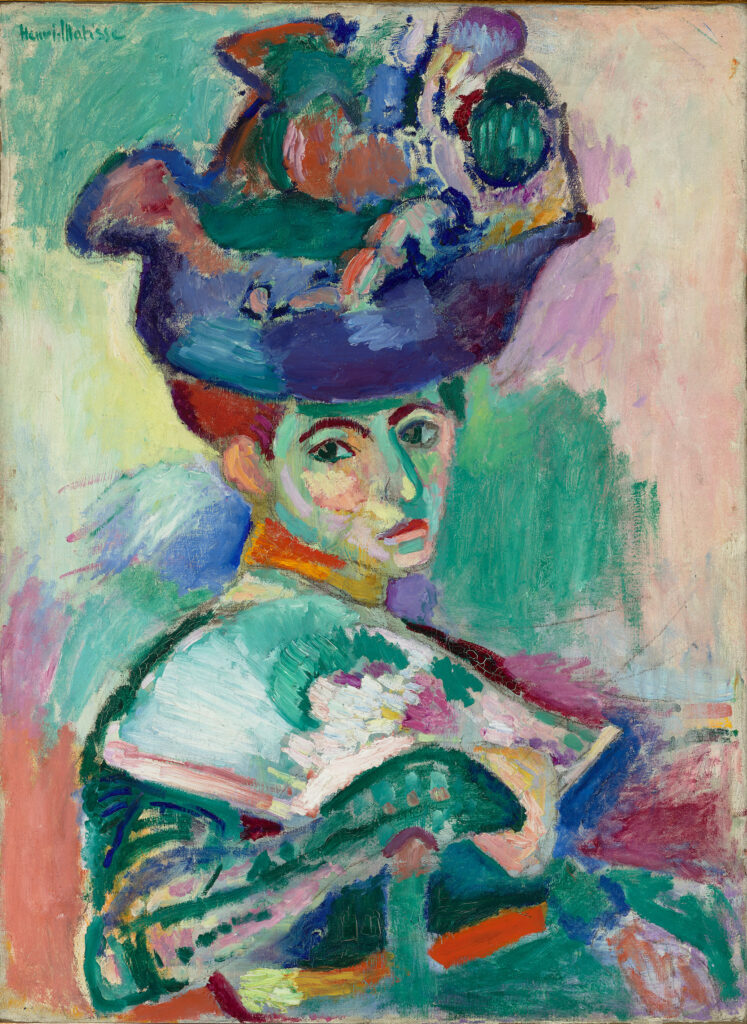
Henri Matisse’s painting Femme au chapeau (Woman with a Hat) (1905) has been part of SFMOMA’s story from the museum’s beginning. This portrait of the artist’s wife and muse, Amélie — considered scandalous by early twentieth-century art critics for its raucous colors and techniques that broke from painting tradition — was first exhibited at the museum in 1936, a year after its founding as the San Francisco Museum of Art, and it has been an icon within our holdings since entering the collection in 1991.
The rich storylines surrounding this masterwork — from its style and subject to its controversial public debut, journey to SFMOMA, and enduring impact on modern and contemporary art — encompass an impressive cast of artists, a famous family of collectors, and an incomparable arts philanthropist, who have each contributed to the history of this work. Matisse’s Femme au chapeau: A Modern Scandal, featuring over ninety works by more than forty artists from the early 1900s to today, tells the full story, which has never been told until now.
FEMME AU CHAPEAU — A NEW DIRECTION
Artists in Paris had been experimenting with new approaches to color in painting since the late nineteenth century. Impressionist painters in the 1870s championed radical techniques like short brushstrokes, pure unmixed colors, and bright synthetic pigments to capture the optical effects of light and portray modern life. Post-Impressionists took even more liberties with color, form, and brushwork.
“Though influenced by the innovations of these predecessors, Matisse’s Femme au chapeau marked a wholly new direction in style where color is fully divorced from observable reality and attempts to capture sensation rather than optical perception and naturalistic representation,” says Maria Castro, former Andrew W. Mellon Foundation Associate Curator of Painting and Sculpture at SFMOMA and co-organizer of the exhibition with Janet Bishop, Thomas Weisel Family Chief Curator. “His brushwork is sketchy and features broad areas of color as well as moments when the canvas and pencil underdrawing are visible. This approach to color and technique stood out, even among other experimental works.”
WILD BEASTS AT THE SALON D’AUTOMNE
Matisse (1869–1954) was thirty-five years old when he unveiled Femme au chapeau in Gallery VII of the 1905 Salon d’Automne (Autumn Salon). One of four sprawling seasonal exhibitions in Paris, this showcase — juried by the association’s member artists, architects, critics, and gallerists — connected emerging artists to new audiences and provided a valuable venue for selling works.
Gallery VII displayed works by Matisse and his peers, along with two Renaissance-style sculptures by Albert Henri Marque. In a review of the gallery, art critic Louis Vauxcelles described Marque’s outlier work among the others in their “orgy of pure tones” as “Donatello chez les fauves,” or “Donatello among the wild beasts.” Others embraced the description and Fauvism emerged as the name for this avant-garde movement, though the artists did not see themselves as such.
Though Matisse had received some recognition by 1905, he was still very much a struggling artist. The salon, and the controversy surrounding these new works with Femme au chapeau at the fore, was the big break that propelled Matisse to success, cementing his reputation as a leader of the post-Impressionist avant-garde and his place in the canon of art history.
Matisse’s Femme au chapeau: A Modern Scandal restages Gallery VII to provide current-day audiences with a taste of what visitors and critics experienced when they first encountered the work in 1905 and why it sparked so much controversy — something that can be hard to imagine in today’s image-saturated world.
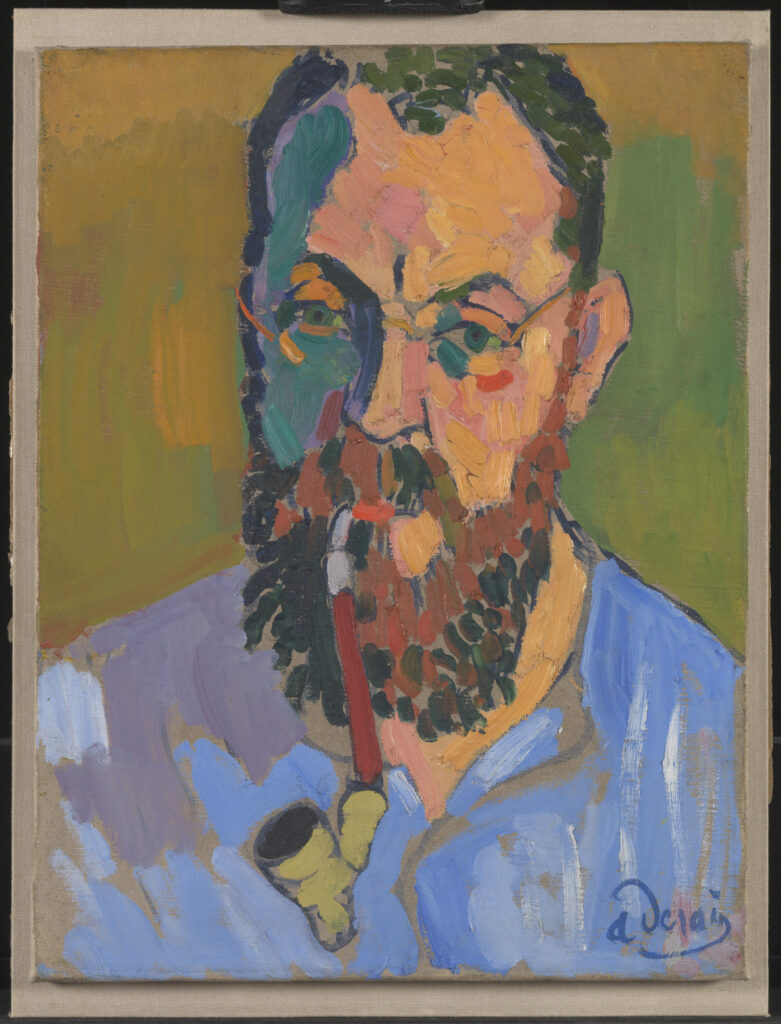
A highlight of the restaging is Open Window, Collioure (1905), a painting drenched in Mediterranean light that exemplifies both Fauvism and Matisse’s career-long penchant for window scenes, which will appear alongside Femme au chapeau for the first time since 1970. Another is a 1905 portrait of Matisse by his Fauvist contemporary André Derain (1880–1954), which delivers a glimpse of the artist around the time he painted Femme au chapeau.
AMÉLIE MATISSE: MAKER AND MUSE
Henri Matisse married Amélie Parayre in 1898 after meeting at a wedding a year earlier. Born in 1872 to free-thinking, activist parents, the charismatic young woman worked as a milliner in her aunt’s Paris boutique before operating her own hat shop between 1899 and 1902. She was thirty-three when she sat for Femme au chapeau, and it is assumed she designed the hat she wears in the portrait.
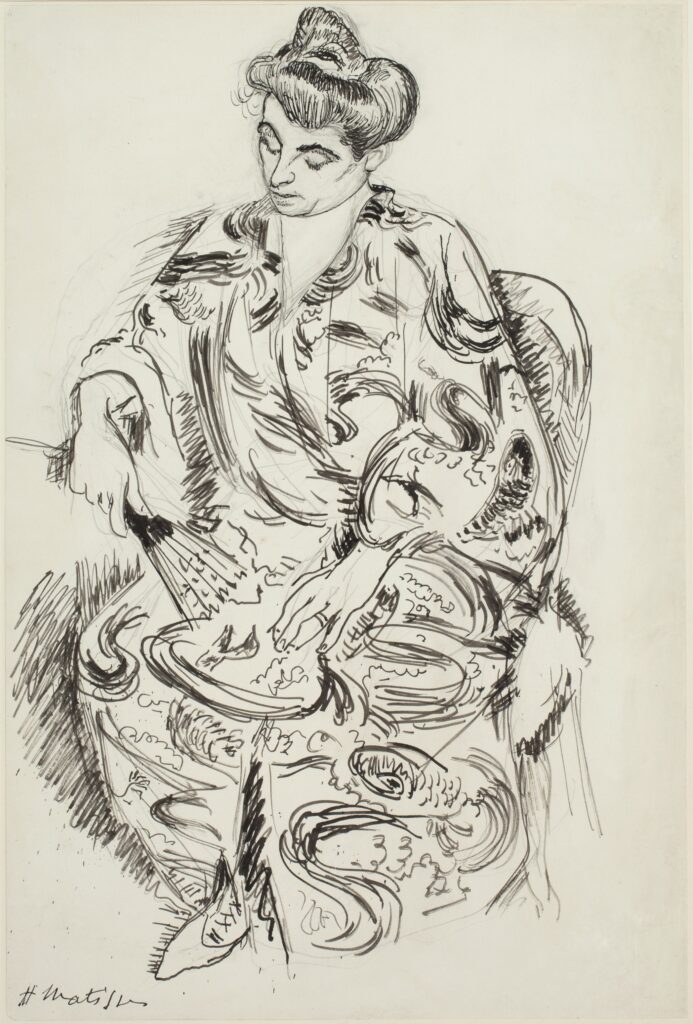
The art historian John Russell wrote that the women in the Parayre family had the “look of Spanish queens,” and Amélie Matisse’s sense of style is evident in the dozens of portraits by her husband. She was also the subject for Albert Marquet’s Portrait of Madame Matisse (ca. 1900) and an ink drawing by Derain that appear in the exhibition.
For forty-one years, Amélie Matisse was a committed partner to her husband, serving as household and business manager, as well as his muse and biggest advocate. Her years with Matisse aligned with his rise as one of the foremost artists of his time. In addition to portraits, ephemera in the exhibition will shine a light on Amélie Matisse’s impact on the artist and as a maker in her own right.
THE STEIN FAMILY—COLLECTORS AND INFLUENCERS
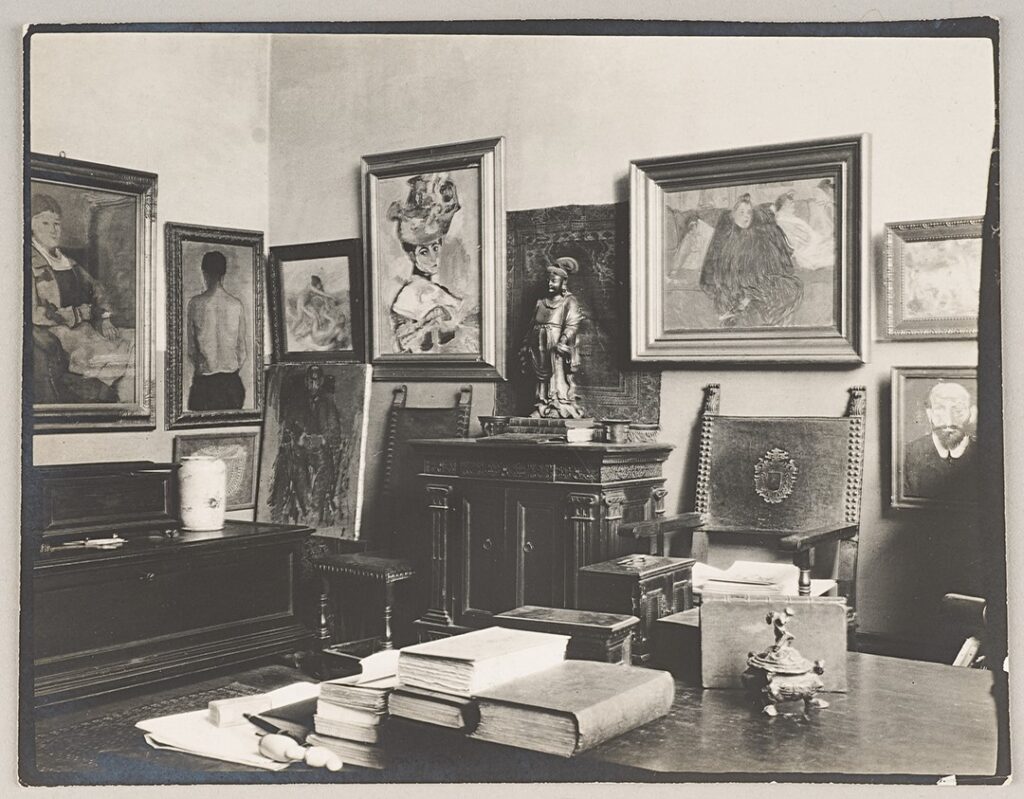
“A thing brilliant and powerful, but the nastiest smear of paint I had ever seen” is how American expatriate Leo Stein described his first impression of Femme au chapeau. But it didn’t deter his sister, Gertrude Stein, and him from purchasing the portrait in 1905, straight out of the Salon. Though wealthy by most standards, the Steins’ resources were not without limits. Their Left Bank apartment at 27 rue de Fleurus was full of art but modest in footprint. “Gertrude Stein once said that ‘you could buy art or you could buy clothes.’ Art was their clear priority,” says Bishop.
Leo and Gertrude Stein, and their older brother and sister-in-law, Michael and Sarah Stein, who moved from San Francisco to Paris in 1903, were all deeply curious, intellectually engaged, and passionate about art. The purchase of Femme au chapeau was the pivotal point after which both Stein households focused their collecting on the new.
Sarah Stein was so captivated by Matisse’s work that she regretted not buying Femme au chapeau herself, and she and Michael readily amassed their own Matisse collection. After Leo and Gertrude parted ways in 1913, Gertrude sold the portrait to Sarah and Michael. Of all its owners, Sarah Stein was closest to Matisse. The artist once said that she knew his paintings even better than he did.
“A thing brilliant and powerful, but the nastiest smear of paint I had ever seen.
—Leo Stein”
FEMME AU CHAPEAU ARRIVES AT SFMOMA
Sarah and Michael Stein returned to the Bay Area in 1935, the year SFMOMA was founded, bringing their exceptional modern art collection with them. Grace McCann Morley, the museum’s first director, eagerly sought an introduction to the couple and by early 1936 she had Femme au chapeau on view.
In the late 1940s, the widowed Sarah Stein began selling her collection, in part to pay off horse-racing debts incurred by her grandson. Her friend Elise S. Haas, the San Francisco–born grandniece of blue jeans company founder Levi Strauss, daughter of financier Sigmund Stern, and an impressive art collector in her own right, purchased several Matisse paintings from the Steins’ collection with her husband Walter A. Haas. In an extraordinary act of generosity, she bequeathed most of her holdings, including Femme au chapeau, to SFMOMA upon her passing in 1990. In addition to selections purchased from Stein, this exhibition will display works from Haas’s collection by Henry Moore, Georgia O’Keeffe, Constantin Brâncuşi, and other celebrated modern artists.
THE LEGACY OF FEMME AU CHAPEAU
Femme au chapeau’s impact in the aftermath of its 1905 debut was immediate, and the exhibition’s final galleries explore the painting’s ongoing resonance then to now. After the Salon d’Automne, artists from Parisian avant-garde circles and beyond began to create their own compositions of women in hats, some directly in dialogue with Matisse’s painting in subject, color, or style. Visitors can view works by Jacqueline Marval, Jean Metzinger, Maurice De Vlaminck, and Kees van Dongen created in 1905 and 1906.
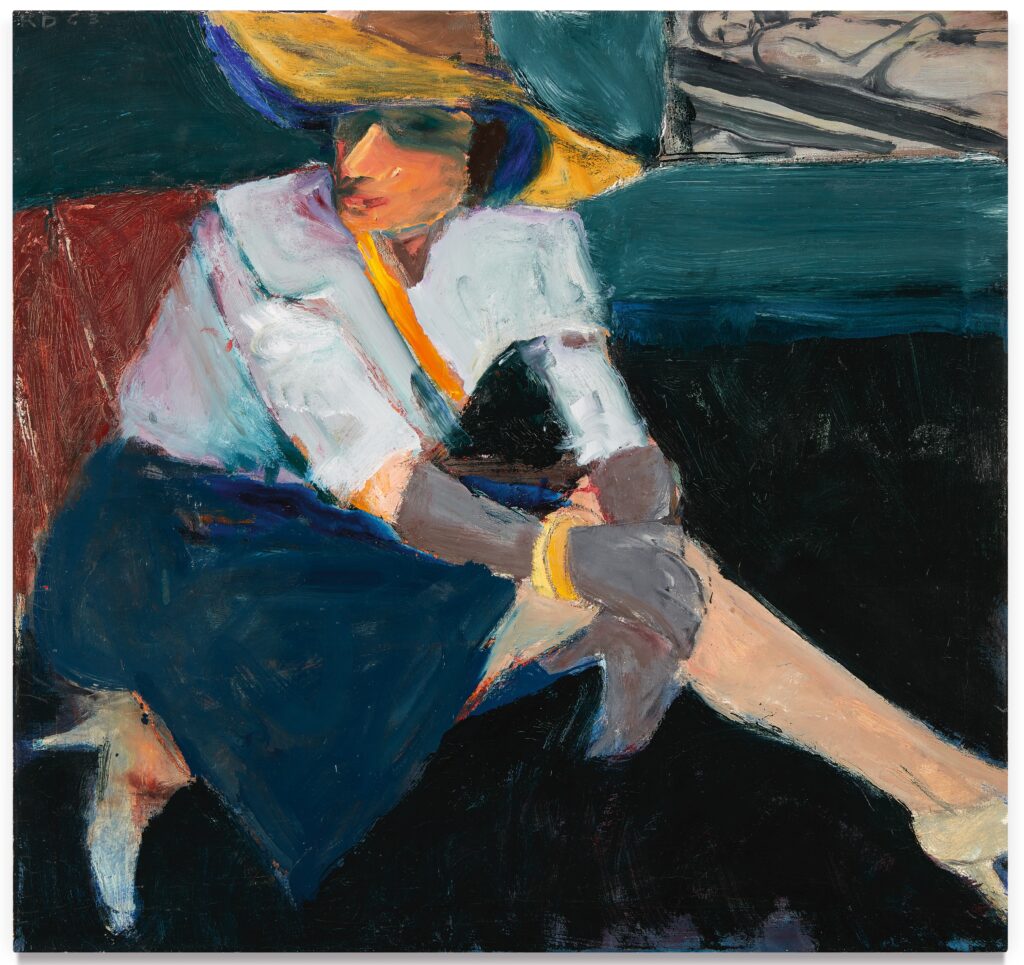
Bay Area Figurative artist Richard Diebenkorn (1922–1993) cited Matisse as an inspiration and encountered Femme au chapeau for the first time at the Palo Alto home of Sarah Stein in 1943, while he was a Stanford undergraduate. Created twenty years later, his Woman in Hat and Gloves (1963) reveals noticeable content and compositional connections to Femme au chapeau. Bishop said in 2017 for SFMOMA’s Matisse/Diebenkorn exhibition, “In Matisse’s work you find precedent for so many of the types of subjects Diebenkorn painted, whether they’re still lifes, women in chairs, or views out the window.”
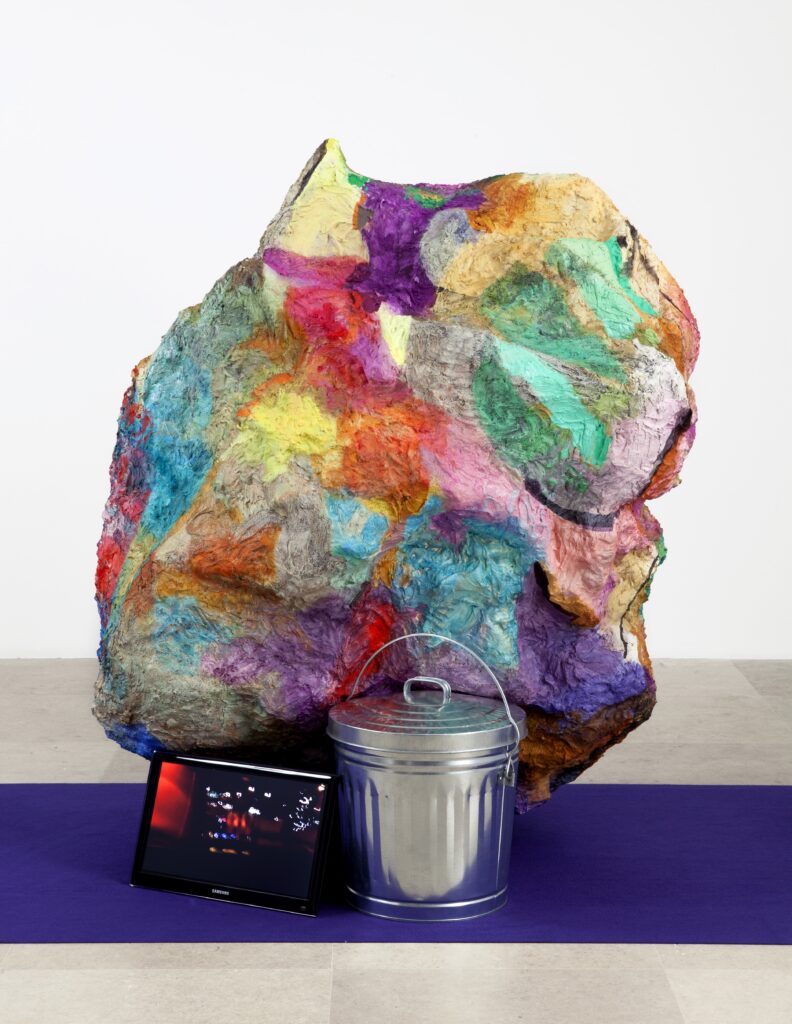
Femme au chapeau continues to inspire artists over a century after its making. In 2012, Rachel Harrison (born 1966) created Hoarders, a multimedia work including wood, polystyrene, chicken wire, cement, and acrylic that Bishop describes as “an exuberant abstract sculpture with no woman and no hat but that directly references Femme au chapeau in its high-keyed color palette, patchy paint handling, and audacity.”
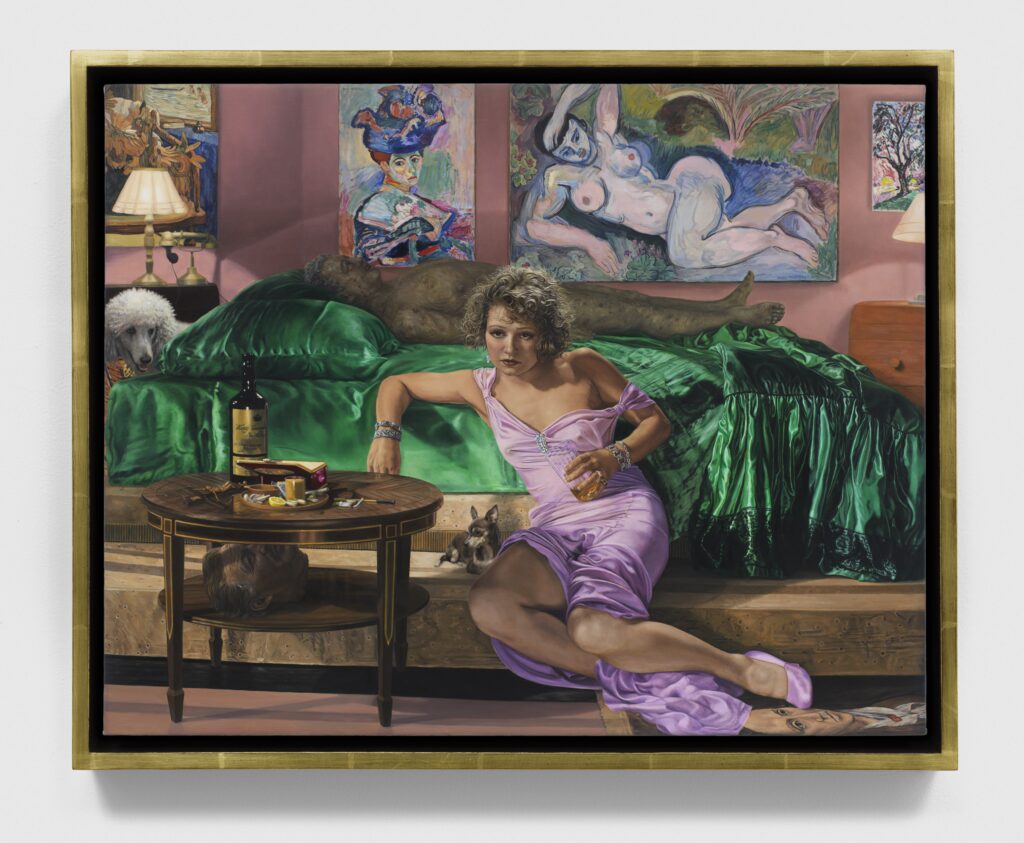
Three paintings by Hillary Harkness (born 1971) use direct and indirect references to Gertrude Stein and Alice B. Toklas, their legendary relationship, circle of associates, and the times in which they lived to comment on contemporary issues of sex and class. Answered Prayers (2024) is a dark take on a 1930s-era boudoir scene with a central female figure reminiscent of Hollywood’s golden age, a decapitated head of Ernest Hemingway (a protégé of Stein’s), and a depiction of Femme au chapeau in the background.
The abundant stories and works woven together in Matisse’s Femme au chapeau: A Modern Scandal offer a rich narrative, and even a touch of time travel, to both long-time admirers of the painting as well as those encountering it for the first time. Castro says, “I hope visitors leave this exhibition with an understanding of the fuller story of Femme au chapeau and why it’s a work that has been so resonant in its own time and also over time.”
Matisse’s Femme au chapeau: A Modern Scandal is on view from May 16 to September 13, 2026.